A common inclusion in many intumescent coating specifications causes more problems than it solves for construction projects.
Qualifying materials that meet certain Shore D hardness levels-and disqualifying those that do not-doesn't actually solve anything. It's a remnant of a best practice that first emerged in a different industry to evaluate a specific coating technology.
It doesn't influence the performance or fitness for service of intumescent materials. But unfortunately, most construction stakeholders don't know this.
To listen to this discussion instead of reading it, hear fireproofing industry expert Michael Hollman on The Red Bucket podcast.
A very brief history of Shore hardnes
The hardness of a material can contribute to its end-use performance, so a wide range of industrial and material science disciplines need a scientifically valid way to measure it.
The American metallurgist Albert Ferdinand Shore's contribution to the science was essential. His invention in 1915 of the Shore durometer gave us a fundamental tool still widely used today to record the hardness of polymers. It consists of an indenter that is pressed into a material and a spring connected to a gauge. The hardness of a material is based on the depth the indenter travels into the material when a standard load is applied.
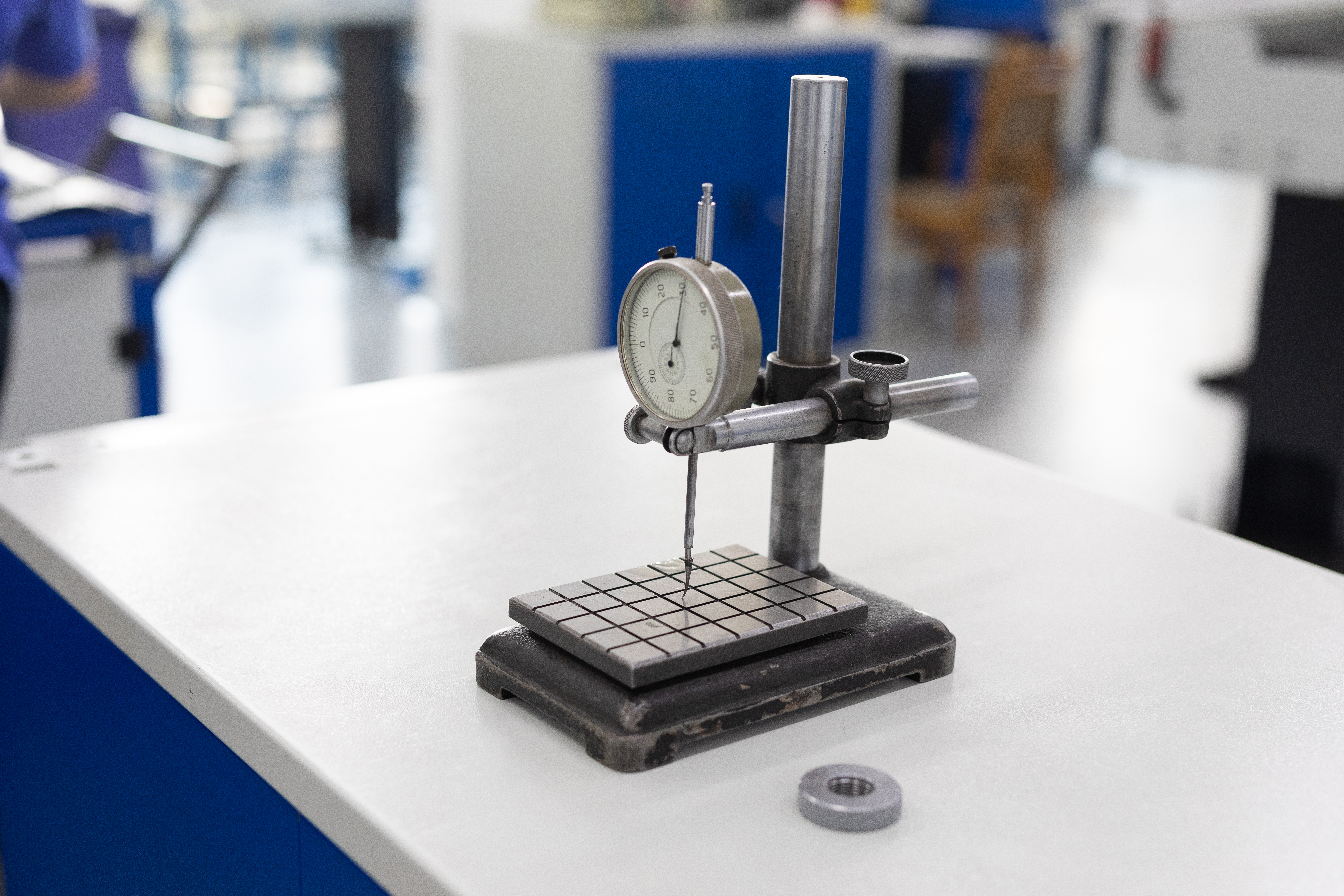
Of course, different materials have different properties, so a range of measurement equipment and methods are available. Consider, for example, the hardness of an anvil versus a marshmallow. Shore durometer testing is conducted on 12 scales, with each scale featuring its own combination of indenter dimensions and spring force.
Many other hardness tests and associated equipment exist, and some are quite popular in coatings. Pencil hardness testing (ASTM D3363/ISO 15184) is very common. Knoop, Vickers, and Buchholz tests also have their uses.
The origin of Shore D hardness evaluations for coatings
Why does the hardness of a cured coating matter?
The coatings industry uses hardness testing as an easy way to judge whether a coating has cured completely and can be put into service. It goes like this: A series of tests of a newly applied coating would show progressively higher hardnesses as the coating cured. When the hardness begins to plateau, curing is judged complete.
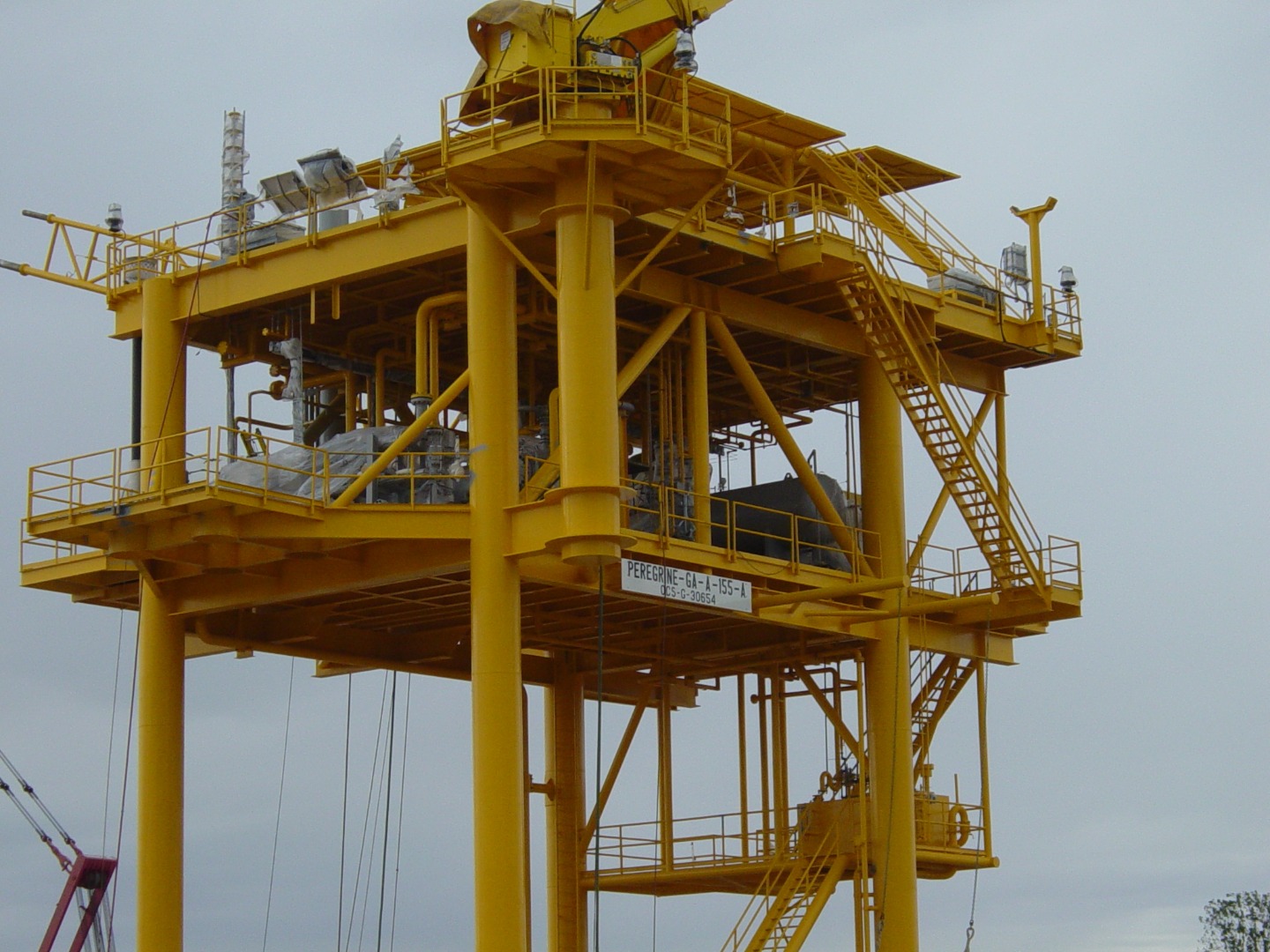
The offshore oil & gas industry seized upon this evaluation method in the middle and latter parts of the last century as offshore exploration and resource extraction accelerated. As with every other aspect of building, installing, and operating offshore infrastructure, protective coatings are selected and applied in a highly regulated, standardized environment.
But why Shore D specifically?
It's because the Shore D durometer configuration (a 30" cone-shaped indenter under 44.45 newtons of force) is a good fit for evaluating hard epoxies, and hard epoxies have historically been the most common protective coatings for offshore oil & gas. They offered the right balance of initial damage resistance in transit from the shop to final installation followed by corrosion protection in service.
It was at this point in history that a reading of 70 on the Shore D hardness scale became meaningful, even if the reason why is elusive. A good guess might be that "good" hard epoxies of the latter 20th century typically topped out at Shore D 70 when fully cured. The repeated observation became the benchmark. And because the benchmark seemed to work, there was no reason to stop using it.
Shore D migrates into commercial intumescent specifications
It might at first seem logical why Shore D 70 was increasingly copy-pasted into intumescent coating specs starting in the 1990s. Whether you're shop-applying a coating for steel for a deep-sea oil rig or for a warehouse on land, you need to be confident it will hold up to the rigors of handling and transportation.
This much is true about construction specifications: If it's in there, it's in there for a reason. Doesn't really matter why. Just go with it.
Does that mean an intumescent material with a value less than Shore D 70 is unfit for service?
Carboline's Thermo-Lag E100 series coatings, long-established in the industry, measure at around Shore D 40 (a golf ball, at Shore D 50, is only slightly harder). That hasn't disqualified them, as its decades of proven performance clearly demonstrate. But Shore D 70 requirements have made specifying them or their peer competitors much harder. Specifications are not easy to change.
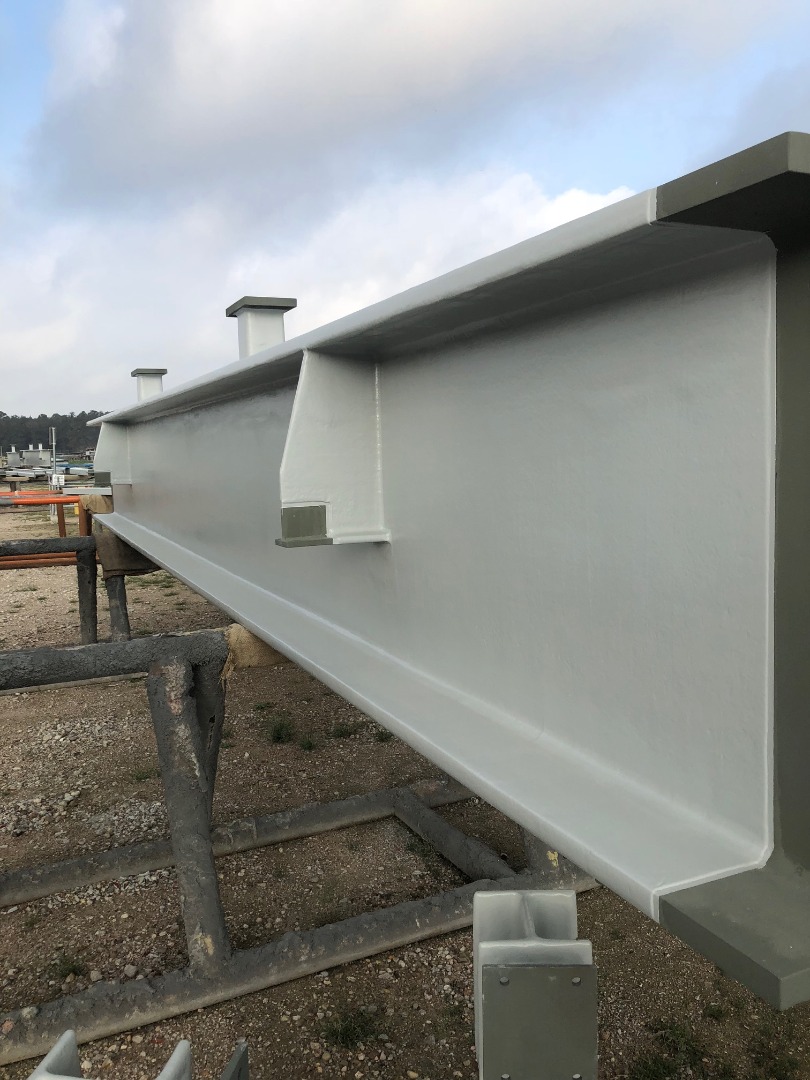
What's worse, innovations in intumescent technology have resulted in new materials that would appear even less qualified for service than older ones. Ductile elastomeric-type materials, such as Thermo-Sorb HB, score a 68 on the Shore A scale. That's about the same as the soles of some shoes.
Why Shore A? Because the Shore A configuration (a 35° cone but with a blunt end instead of a pointed one, and under 8.05 newtons of force) is more appropriate for ductile materials, including elastomeric intumescent coatings.
Rigid specs requiring Shore D 70 would instantly reject Thermo-Sorb HB as unsuitable.
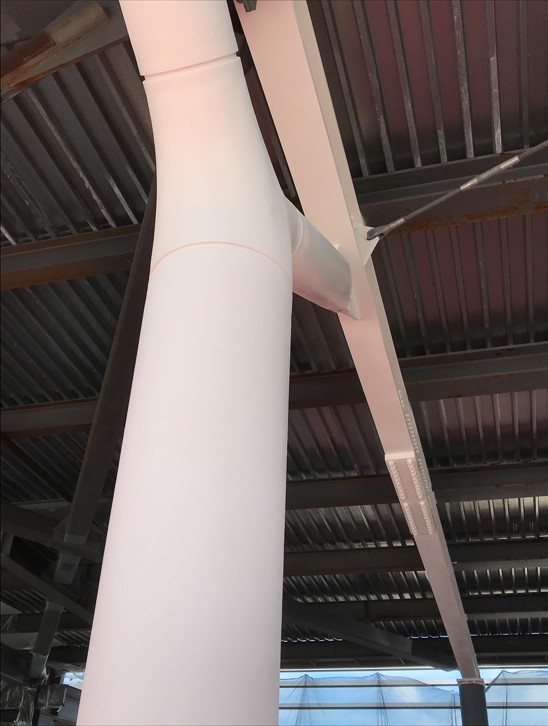
Clearly, we have some problems.
One concerns the validity of assessing ductile elastomeric products with the same scale and equipment that our grandparents used on hard epoxies. These are completely different technologies.
Another is that the variety of fabrication shop best practices related to the handling of coated workpieces are well documented and suitably mitigate damage risk. The hardness of a material is not its only defense against damage.
Next, though high hardness might be nice in some circumstances, it's almost always accompanied by brittleness, especially at low temperatures. Brittle materials crack more easily, and the rigidity of a hard material means cracks can expand well beyond the immediate impact area. Conversely, a more ductile material like single-component Thermo-Sorb HB cures via solvent evaporation and tolerates severe conditions better. In the event a ductile product is damaged, the damage is much more localized for simpler, cheaper repairs.
Finally, and most critically, hardness has no influence on an intumescent coating's fire-resistive performance. If it had, it would be among the strict criteria any intumescent material must meet, as verified through third-party approval bodies, before manufacturers are allowed to sell it.
The bottom line is, if intumescent materials continue to be qualified or disqualified based on this magical figure of Shore D 70, construction teams close themselves off from considering other high-performing products and instead open themselves up to avoidable and costly risks.
What's the way forward?
An intumescent coating's hardness is useful information, so we don't think it should be eliminated from builders' consideration. But we do think the subject needs to be better understood and contextualized.
In our view, that means three things:
One, the construction industry should understand the original reason why Shore D 70 hardness was important. It was a marker of the curing progress of hard epoxies in the offshore oil & gas sector. It is unrelated to a coating's end-use performance.
Two, the hardnesses of competing coatings, regardless of the scale used to assess them, should never be the primary basis on which one is selected over another. Hardness is no more influential than the other metrics manufacturers publish as decision-making aids. The hardness of a coating could be used as a quality control measurement to determine when the coated structure is ready to be overcoated, moved or transported. But this should be done using the testing configuration that is appropriate for the specific product selected.
And third, knowledge of the other hardness scales and testing configurations-most importantly Shore A-will result in specifications qualifying a wider range of materials. This gives construction teams more flexibility in selecting products certified to perform while also offering constructability perks that save time and money.
After all, savings is the animating energy in construction today. Builders have never been under more pressure to put as much money back into their customers' pockets as they can.
Understanding the truth about intumescent coating hardness gives them another way to do it.